

Church Hill, Virginia
Market Monitor & Neighborhood Narrative
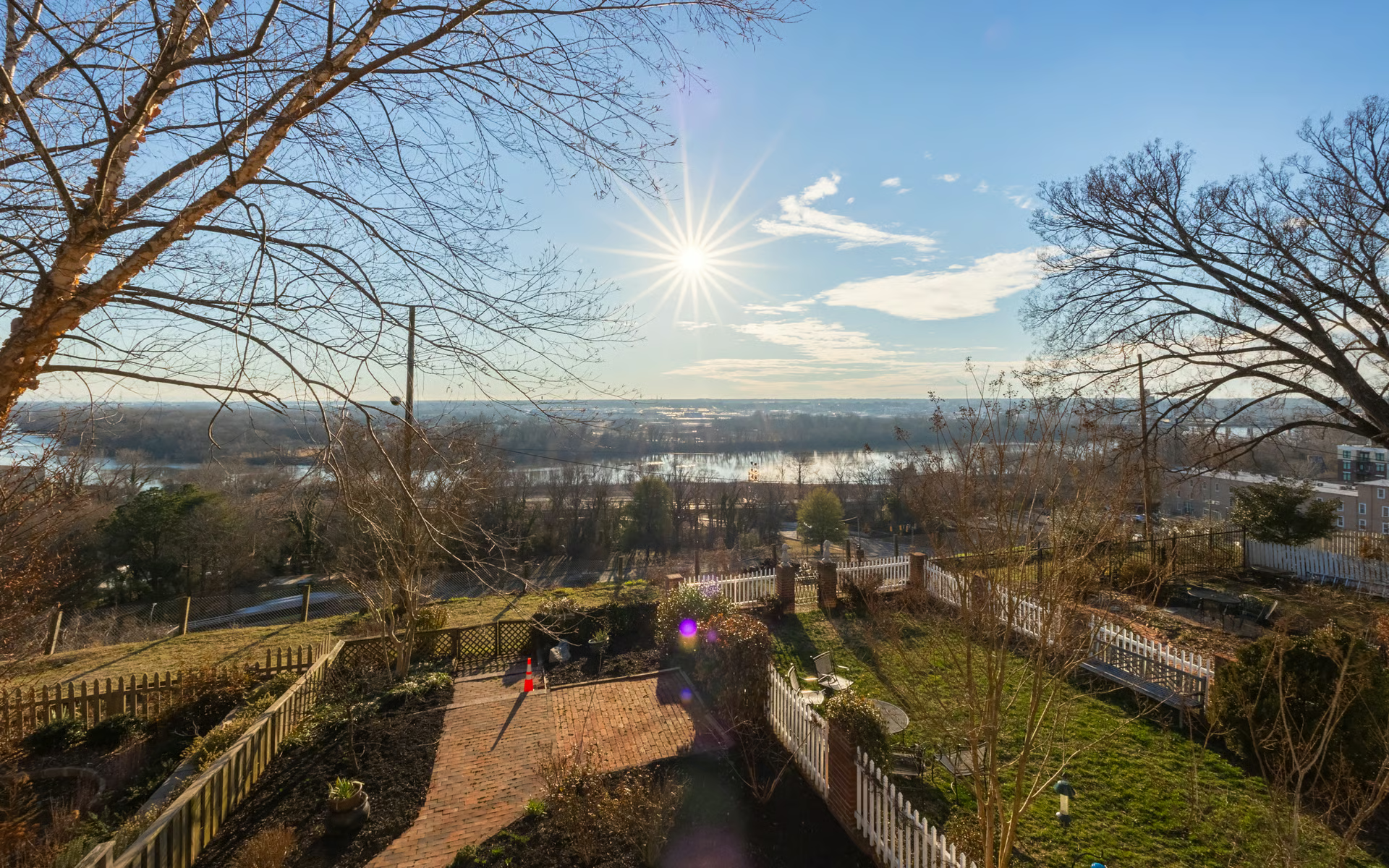
Church Hill
A “historic village” next to downtown with blue-chip stability and preservation-protected character.
Church Hill blends protected 18th–19th century streetscapes (CAR oversight), strong “porch culture” community cohesion, and quick access to Richmond’s core job centers—without the dense, frantic feel of downtown.
Market Metrics
$575,000–$610,000 (Core)
Median Price
~44%
Ownership Rate
~0.06 acres (typ.)
Lot Size

Strategic Overview
Executive Summary
Connectivity
Central Access Logic
Airport: 15–20 min
Downtown: 5–10 min
Minutes (illustrative)

Preservation Premium
CAR oversight protects streetscape cohesion, helping sustain demand and long-term value resilience.

Urban Village Stickiness
Metroplex Strategic Placement
Church Hill Strategic Location
Is Church Hill actually “close to everything” or does the hill make it feel isolated?
It’s both: geographically close, but psychologically separated. The bluff-top elevation creates a calm “removed” feel while keeping downtown, VCU Health, and I-95/airport access unusually fast for an urban historic district.
Market Queries
Church Hill Essentials
Is Church Hill more of an investment play or a lifestyle-first neighborhood?
It’s lifestyle-first with investment-grade fundamentals. Scarce historic inventory, preservation controls, and high demand for character-driven housing support long-term value stability.
Why does the historic core price so much higher than Church Hill North?
The south is “finished” and inventory is tighter. South of Broad has more restored streetscapes, fewer distressed properties, and premium proximity to St.John’s/Libby Hill, which compresses supply and elevates pricing.
Do preservation rules help or hurt buyers long term?
They help long-term values but raise ownership friction. CAR guidelines protect visual cohesion, but they can increase renovation cost and extend timelines for windows, roofs, and exterior changes.
Is Church Hill walkable enough to reduce car dependence?
Yes, for daily routines—especially in the core. Coffee, bakery, parks, and neighborhood dining are commonly walkable, but larger grocery runs often still involve driving.
What’s the biggest day-to-day tradeoff residents mention?
Grocery convenience and pricing is the recurring friction point. The Market at 25th improves access, but many residents still do “hybrid” shopping for bulk staples outside the neighborhood.
Is the commute genuinely short, or does traffic erase the advantage?
Commutes to downtown and VCU Health are consistently short. Church Hill’s location yields some of the most efficient access in the region to the CBD and medical campus compared to West End alternatives.
Does the neighborhood feel “touristy” because of St. John’s Church?
Tourism exists, but residential life stays calm. Historic anchors draw visitors, yet the street grid and bluff edges limit through-traffic, keeping evenings quieter than entertainment-heavy districts.
What kind of buyer profile fits Church Hill best?
Buyers who prioritize character and community over suburban convenience. The strongest fit is someone who values architecture, parks/views, and neighborhood “third places,” and is comfortable with urban tradeoffs.
Is there meaningful upside left, or is the “deal era” over?
The deal era is mostly over, but stability remains strong. Rapid appreciation has cooled, yet scarcity, preservation, and corridor improvement continue to support durable long-term positioning.
What should a buyer inspect most carefully in this housing stock?
Exterior elements governed by preservation rules are the cost multipliers. Roof type, window condition, masonry, and prior permit history matter because “in-kind” restoration requirements can materially change budgets.
Church Hill, Virginia
Market Monitor & Neighborhood Narrative
Church Hill:
A “historic village” next to downtown with blue-chip stability and preservation-protected character.
Church Hill blends protected 18th–19th century streetscapes (CAR oversight), strong “porch culture” community cohesion, and quick access to Richmond’s core job centers—without the dense, frantic feel of downtown.
Strategic Overview
Executive Summary
Church Hill is one of Richmond’s most established historic revitalization stories—architecturally protected, highly “sticky” for residents, and positioned for long-term value stability due to scarce historic inventory.
Pricing is bifurcated: the historic core (south of Broad) typically stabilizes around the $600K range, while Church Hill North presents a more accessible entry band in the high $300Ks, with more renovation and infill dynamics.
Market Metrics
$575,000–$610,000 (Core)
Median Price
Historic core pricing band (south of Broad) reflects a “finished” preservation premium.
~44%
Ownership Rate
Owner-occupancy supports stability, stewardship, and lower turnover in prime blocks.
~0.06 acres (typ.)
Lot Size
Compact historic urban lots (rowhouse/detached mix) dominate the neighborhood grid.
Connectivity
Central Access Logic
Church Hill functions as a quiet bluff-top residential plateau with unusually short access to Richmond’s core employment districts—downtown and VCU Health—while remaining highly connected to I-95 and the airport.
Airport: 15–20 min
Downtown: 5–10 min
Minutes (illustrative)

Preservation Premium
CAR oversight protects streetscape cohesion, helping sustain demand and long-term value resilience.

Urban Village Stickiness
“Porch culture,” parks, and a tight third-place ecosystem reduce churn and support neighborhood stability.
Metroplex Strategic Placement
Church Hill Strategic Location
Is Church Hill actually “close to everything” or does the hill make it feel isolated?
It’s both: geographically close, but psychologically separated. The bluff-top elevation creates a calm “removed” feel while keeping downtown, VCU Health, and I-95/airport access unusually fast for an urban historic district.
Market Queries
Church Hill Essentials
Is Church Hill more of an investment play or a lifestyle-first neighborhood?
It’s lifestyle-first with investment-grade fundamentals. Scarce historic inventory, preservation controls, and high demand for character-driven housing support long-term value stability.
Why does the historic core price so much higher than Church Hill North?
The south is “finished” and inventory is tighter. South of Broad has more restored streetscapes, fewer distressed properties, and premium proximity to St. John’s/Libby Hill, which compresses supply and elevates pricing.
Do preservation rules help or hurt buyers long term?
They help long-term values but raise ownership friction. CAR guidelines protect visual cohesion, but they can increase renovation cost and extend timelines for windows, roofs, and exterior changes.
Is Church Hill walkable enough to reduce car dependence?
Yes, for daily routines—especially in the core. Coffee, bakery, parks, and neighborhood dining are commonly walkable, but larger grocery runs often still involve driving.
What’s the biggest day-to-day tradeoff residents mention?
Grocery convenience and pricing is the recurring friction point. The Market at 25th improves access, but many residents still do “hybrid” shopping for bulk staples outside the neighborhood.
Is the commute genuinely short, or does traffic erase the advantage?
Commutes to downtown and VCU Health are consistently short. Church Hill’s location yields some of the most efficient access in the region to the CBD and medical campus compared to West End alternatives.
Does the neighborhood feel “touristy” because of St. John’s Church?
Tourism exists, but residential life stays calm. Historic anchors draw visitors, yet the street grid and bluff edges limit through-traffic, keeping evenings quieter than entertainment-heavy districts.
What kind of buyer profile fits Church Hill best?
Buyers who prioritize character and community over suburban convenience. The strongest fit is someone who values architecture, parks/views, and neighborhood “third places,” and is comfortable with urban tradeoffs.
Is there meaningful upside left, or is the “deal era” over?
The deal era is mostly over, but stability remains strong. Rapid appreciation has cooled, yet scarcity, preservation, and corridor improvement continue to support durable long-term positioning.
What should a buyer inspect most carefully in this housing stock?
Exterior elements governed by preservation rules are the cost multipliers. Roof type, window condition, masonry, and prior permit history matter because “in-kind” restoration requirements can materially change budgets.