

Goochland County, Virginia
Market Monitor & Neighborhood Narrative
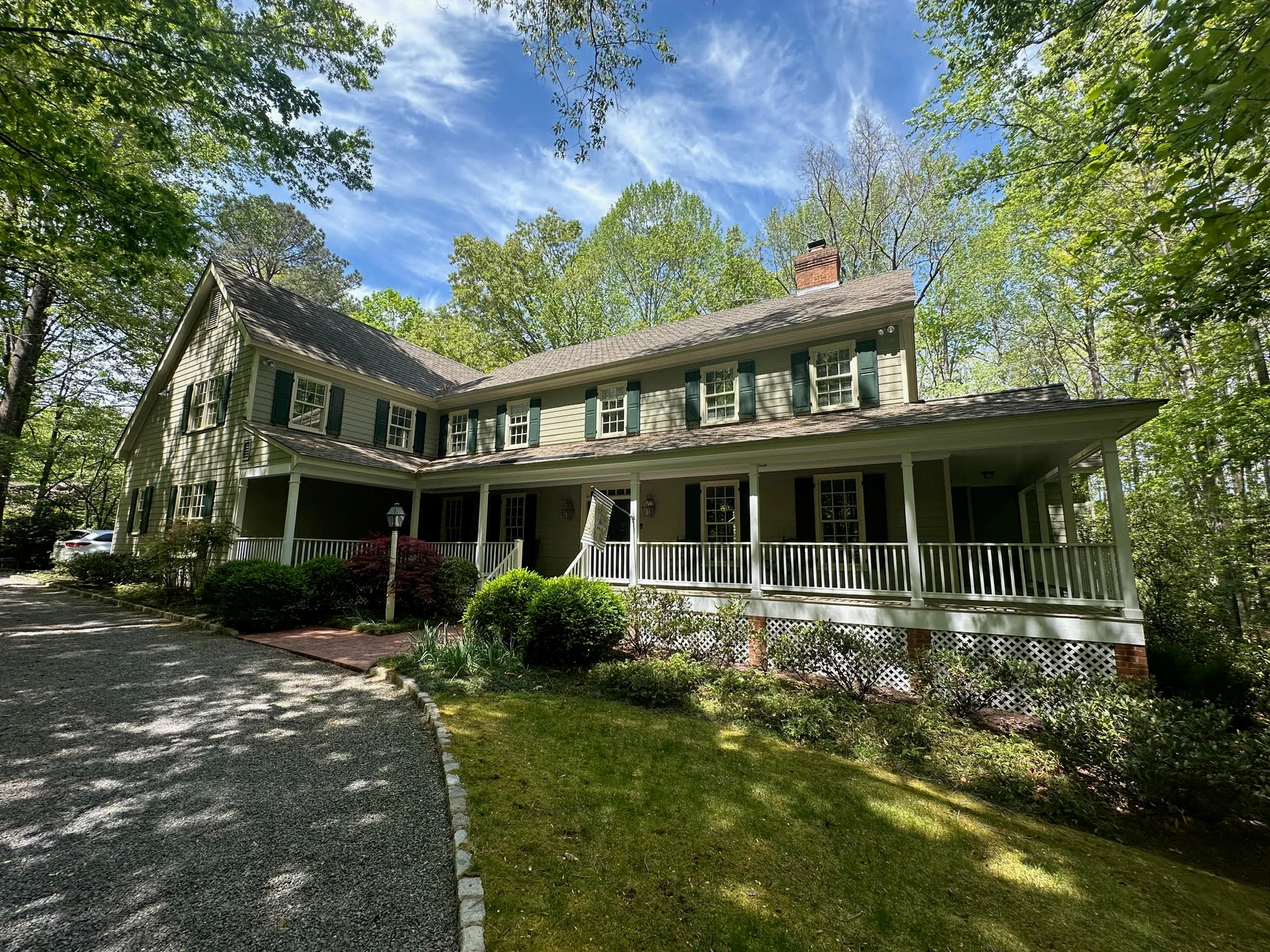
Goochland County
A luxury “edge-city” sanctuary with Virginia’s lowest property taxes and Richmond access.
Goochland delivers rural privacy and land preservation economics—subsidized by a major commercial tax base (West Creek)—which supports a stable, low real estate tax rate and strong long-term value retention.
Market Metrics
$744,300
Median Price
~88%
Ownership Rate
2–5+ acre
Lot Size

Strategic Overview
Executive Summary
Goochland County is a structural anomaly in Central Virginia: supply is deliberately constrained by an “85% rural” land use mandate, creating high barriers to entry and scarcity-driven value protection. Its defining advantage is fiscal efficiency—anchored by the West Creek employment corridor—allowing a low residential tax burden while still funding elite public schools and infrastructure that reinforce long-term retention.
Connectivity
Central Access Logic
Airport: ~40 min (RIC)
Downtown: ~28 min (Richmond CBD)
Minutes (illustrative)

Tax Efficiency Moat
One of the region’s lowest base real estate tax rates supports long-term holding power and value retention.

Scarcity by Design
Metroplex Strategic Placement
Goochland County Strategic Location
Is Goochland basically “Short Pump with acreage” in the east?
Yes—Manakin-Sabot operates like an estate-style extension of Richmond’s West End. It delivers premium pricing because it blends proximity to Short Pump/Route 288 with larger lots, privacy, and high-end communities (e.g., Kinloch area influence).
Does I-64 materially change which micro-markets appreciate fastest?
Yes—the I-64 corridor is the valuation spine. It concentrates commute efficiency and access, which tends to pull demand toward Oilville/Rockville and the eastern “Notch” over more isolated rural crossroads.
Is West Creek the real reason taxes stay low?
Yes—the commercial tax base is the fiscal engine. Major employers in the West Creek Business Park subsidize county services and help keep residential carrying costs unusually favorable.
Do long commutes weaken buyer demand here?
No—commute tradeoffs are “priced in” and self-select the buyer pool. Many residents accept longer drive times in exchange for land, quiet, and lower taxes; eastern areas also leverage Route 288 to bypass congestion.
Is the James River corridor a different market than the rest of Goochland?
Yes—River Road (Route 6) behaves like a preservation-first estate market. Scenic byway characteristics and easements concentrate high-value properties where “viewshed protection” is part of the premium.
Are western districts becoming more investable because of fiber expansion?
Yes—universal fiber is a major demand catalyst. As broadband constraints fall, remote-work buyers can consider larger-acreage areas that used to be discounted for connectivity.
Market Queries
Goochland County Essentials
Is Goochland a seller’s market long-term?
Yes—scarcity and high retention keep supply tight. Large-lot zoning and restrictive development policy reduce inventory growth, supporting steady appreciation rather than boom-bust volatility.
Is the low tax rate enough to offset the higher purchase price?
Often, yes—lower carrying costs compound over time. The structural tax advantage can materially improve 10-year ownership economics versus neighboring counties, especially outside utility surtax zones.
Is most housing here single-family?
Yes—single-family dominates the housing stock Limited multifamily and rental options reinforce stability but reduce “try-before-you-buy” flexibility.
Are wells and septic a meaningful hidden cost?
Yes—private utilities require active due diligence. Buyers should budget for inspections, maintenance cycles, and potential upgrades that public-utility buyers often overlook.
Do schools materially influence price resilience in Goochland?
Yes—elite public schools are a core value pillar. Strong performance and funding stability support demand from families and help preserve pricing through market cycles.
Is there political risk around data centers and growth plans?
Yes—future zoning decisions can impact specific corridors. Technology overlay discussions and growth-area planning can shift noise/visual impacts and buyer perception near designated zones.
Goochland County, Virginia
Market Monitor & Neighborhood Narrative
Goochland County:
A luxury “edge-city” sanctuary with Virginia’s lowest property taxes and Richmond access.
Goochland delivers rural privacy and land preservation economics—subsidized by a major commercial tax base (West Creek)—which supports a stable, low real estate tax rate and strong long-term value retention.
Strategic Overview
Executive Summary
Goochland County is a structural anomaly in Central Virginia: supply is deliberately constrained by an “85% rural” land use mandate, creating high barriers to entry and scarcity-driven value protection.
Its defining advantage is fiscal efficiency—anchored by the West Creek employment corridor—allowing a low residential tax burden while still funding elite public schools and infrastructure that reinforce long-term retention.
Market Metrics
$744,300
Median Price
Premium positioning within the Richmond Metro wealth belt.
~88%
Ownership Rate
High retention and stability signal.
2–5+ acres
Lot Size
Low-density zoning supports privacy and land value.
Connectivity
Central Access Logic
Goochland functions as an executive retreat for the Richmond region: buyers trade a slightly longer commute for land, quiet, and long-term carrying-cost advantages—especially outside the utility-service surtax zones.
Airport: ~40 min (RIC)
Downtown: ~28 min (Richmond CBD)
Minutes (illustrative)

Tax Efficiency Moat
One of the region’s lowest base real estate tax rates supports long-term holding power and value retention.

Scarcity by Design
85% rural zoning and large-lot requirements restrict supply and preserve rural character as an economic asset.
Metroplex Strategic Placement
Goochland County Strategic Location
Is Goochland basically “Short Pump with acreage” in the east?
Yes—Manakin-Sabot operates like an estate-style extension of Richmond’s West End. It delivers premium pricing because it blends proximity to Short Pump/Route 288 with larger lots, privacy, and high-end communities (e.g., Kinloch area influence).
Does I-64 materially change which micro-markets appreciate fastest?
Yes—the I-64 corridor is the valuation spine. It concentrates commute efficiency and access, which tends to pull demand toward Oilville/Rockville and the eastern “Notch” over more isolated rural crossroads.
Is West Creek the real reason taxes stay low?
Yes—the commercial tax base is the fiscal engine. Major employers in the West Creek Business Park subsidize county services and help keep residential carrying costs unusually favorable.
Do long commutes weaken buyer demand here?
No—commute tradeoffs are “priced in” and self-select the buyer pool. Many residents accept longer drive times in exchange for land, quiet, and lower taxes; eastern areas also leverage Route 288 to bypass congestion.
Is the James River corridor a different market than the rest of Goochland?
Yes—River Road (Route 6) behaves like a preservation-first estate market. Scenic byway characteristics and easements concentrate high-value properties where “viewshed protection” is part of the premium.
Are western districts becoming more investable because of fiber expansion?
Yes—universal fiber is a major demand catalyst. As broadband constraints fall, remote-work buyers can consider larger-acreage areas that used to be discounted for connectivity.
Market Queries
Goochland County Essentials
Is Goochland a seller’s market long-term?
Yes—scarcity and high retention keep supply tight. Large-lot zoning and restrictive development policy reduce inventory growth, supporting steady appreciation rather than boom-bust volatility.
Is the low tax rate enough to offset the higher purchase price?
Often, yes—lower carrying costs compound over time. The structural tax advantage can materially improve 10-year ownership economics versus neighboring counties, especially outside utility surtax zones.
Is most housing here single-family?
Yes—single-family dominates the housing stock. Limited multifamily and rental options reinforce stability but reduce “try-before-you-buy” flexibility.
Are wells and septic a meaningful hidden cost?
Yes—private utilities require active due diligence. Buyers should budget for inspections, maintenance cycles, and potential upgrades that public-utility buyers often overlook.
Do schools materially influence price resilience in Goochland?
Yes—elite public schools are a core value pillar. Strong performance and funding stability support demand from families and help preserve pricing through market cycles.
Is there political risk around data centers and growth plans?
Yes—future zoning decisions can impact specific corridors. Technology overlay discussions and growth-area planning can shift noise/visual impacts and buyer perception near designated zones.