

Short Pump, Virginia
Market Monitor & Neighborhood Narrative
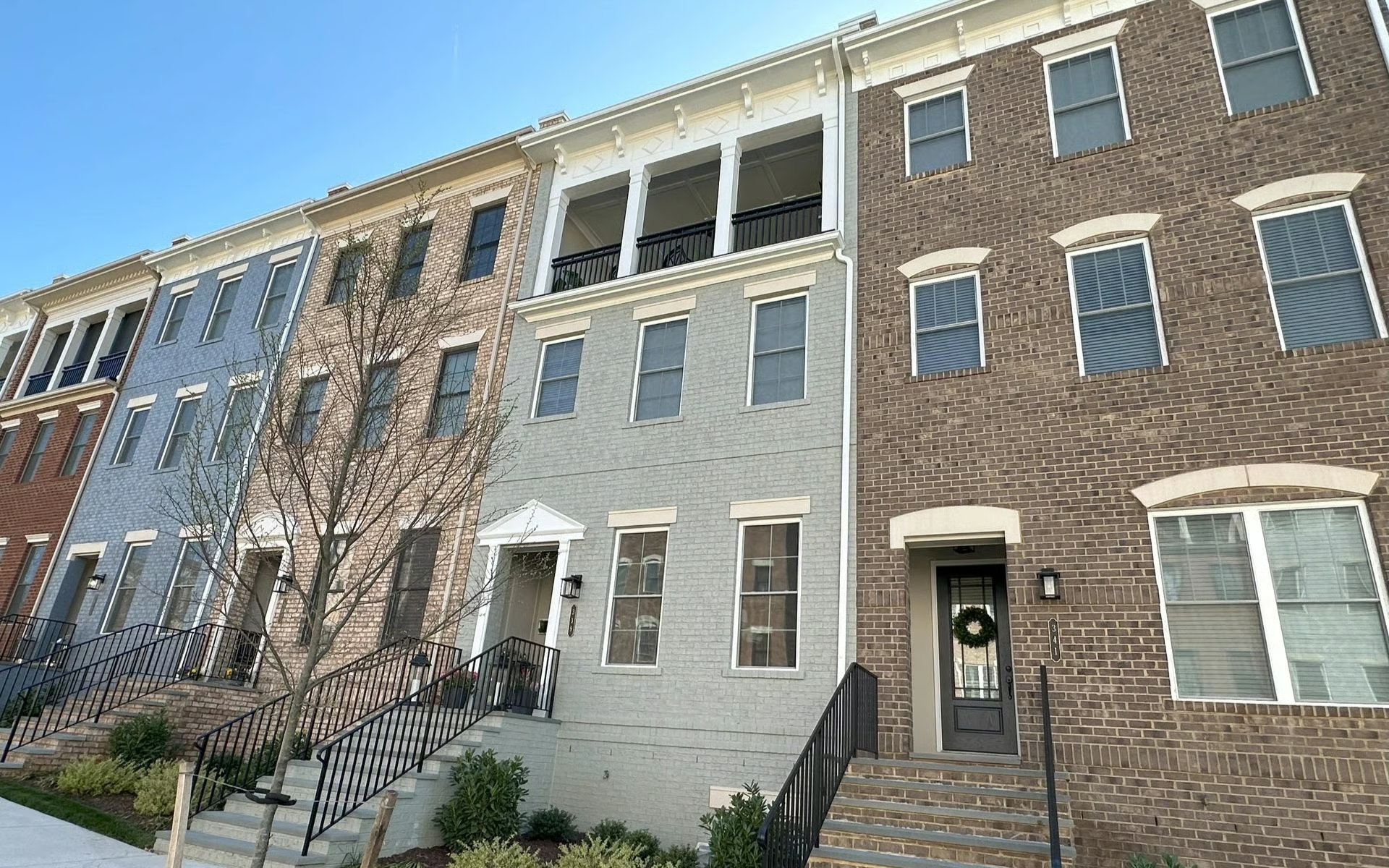
Short Pump
Premium Convenience “Edge City” With School-Zone Value Support
Market Metrics
$615,000
Median Price
57.9%
Ownership Rate
0.25–0.75+ acres
Lot Size

Strategic Overview
Executive Summary
Connectivity
Central Access Logic
Airport: 27 min
Downtown: 18 min
Minutes (illustrative)

Premium Convenience

School-Zone Demand Floor
Metroplex Strategic Placement
Short Pump Strategic Location
Is Short Pump effectively the “downtown” of Richmond’s West End?
Yes—functionally, it operates as the West End’s downtown. Its commercial and medical density (Town Center, GreenGate, West Broad Village, and major outpatient hubs) concentrates jobs, services, and lifestyle uses in one corridor.
How far is Short Pump from downtown Richmond in normal driving conditions?
It’s typically under 20 minutes by car. The area sits roughly 11–12 miles west of Richmond’s core, with drive times commonly around 18 minutes in non-peak conditions.
Why does highway access matter so much in this neighborhood?
Because Short Pump is built around regional road convergence. I-64, I-295, Route 288, and Broad Street intersect here, making it the highest-access point for western metro commutes.
Is Short Pump walkable day-to-day?
Only in specific pockets, not as a whole. West Broad Village and GreenGate offer “urban-lite” walkability, but most subdivisions require driving—especially across Broad Street.
What are the most common commute targets from Short Pump?
Innsbrook and West Creek are the primary targets. Innsbrook is commonly a sub-10-minute run, and Capital One’s West Creek campus is typically a 10–15 minute drive via Route 288.
Does traffic materially impact quality of life here?
Yes—peak-hour congestion is one of the core tradeoffs. The I-64/Broad Street interchange and retail-season surges create predictable bottlenecks that residents plan around.
Market Queries
Short Pump Essentials
What’s the current price positioning for Short Pump compared to the broader Richmond metro?
Short Pump sits at a clear premium. Recent median sale pricing has been cited around $615,000 (late 2025), reflecting a convenience + school-zone demand floor.
What’s the entry price range if a buyer wants to get into the area?
Entry pricing commonly starts in the mid-$300Ks to mid-$400Ks. That tier is typically smaller/older condos or townhomes in fringe submarkets before stepping into the $550K–$750K mid-market.
Who is this neighborhood an especially strong fit for?
It’s best for efficiency-first professionals, school-oriented families, and active-adult downsizers. The “bubble” convenience, medical access, and inventory diversity support long-term resident retention across life stages.
What housing types dominate the neighborhood’s “lifecycle ladder”?
Single-family neighborhoods anchor the core, with newer growth skewing attached products. Established SFH communities (Wyndham, Twin Hickory) balance newer townhome nodes (West Broad Village, GreenGate) and luxury multifamily.
Why do schools matter so much in Short Pump pricing?
Because the feeder patterns create a “value floor.” Demand is reinforced by high-performing public school infrastructure (notably the Deep Run pattern), which supports liquidity and price resilience.
What are the biggest buyer tradeoffs here?
You typically trade charm and empty roads for efficiency and predictability. Buyers choose between walkable pockets with HOA density versus larger-lot subdivisions that require driving for nearly everything.
Short Pump, Virginia
Market Monitor & Neighborhood Narrative
Short Pump:
Premium Convenience “Edge City” With School-Zone Value Support
A high-efficiency West End lifestyle hub where A-grade retail, healthcare, and top feeder patterns cluster inside a tight radius—trading historic charm for time savings, predictability, and durable demand.
Strategic Overview
Executive Summary
Short Pump is the West End’s primary “Edge City” node—an intensive mixed-use engine that functions like a secondary downtown for the Greater Richmond region, anchored by major retail, medical, and school infrastructure.
It commands a measurable convenience premium—supported by highway convergence and high-performing feeder patterns—while facing predictable tradeoffs: peak-hour bottlenecks, an auto-centric layout outside walkable pockets, and a higher barrier to entry than the broader metro.
Market Metrics
$615,000
Median Price
Convenience premium for West End lifestyle + schools.
57.9%
Ownership Rate
Owner-occupied housing unit rate (latest ACS period).
0.25–0.75+ acres
Lot Size
Wide variance: dense townhome nodes to estate sections.
Connectivity
Central Access Logic
Short Pump sits on a “super-convergence” of regional routes (I-64, I-295, Route 288, Broad Street), positioning it as the most accessible node for the western half of the Richmond metro—especially for Innsbrook and West Creek employment patterns.
Airport: 27 min
Downtown: 18 min
Minutes (illustrative)

Premium Convenience
A-grade retail + services cluster tightly—errands compress into a true “15-minute drive” lifestyle loop.

School-Zone Demand Floor
Deep Run feeder pattern acts as a value stabilizer—supporting liquidity even when broader cycles soften.
Metroplex Strategic Placement
Short Pump Strategic Location
Is Short Pump effectively the “downtown” of Richmond’s West End?
Yes—functionally, it operates as the West End’s downtown. Its commercial and medical density (Town Center, GreenGate, West Broad Village, and major outpatient hubs) concentrates jobs, services, and lifestyle uses in one corridor.
How far is Short Pump from downtown Richmond in normal driving conditions?
It’s typically under 20 minutes by car. The area sits roughly 11–12 miles west of Richmond’s core, with drive times commonly around 18 minutes in non-peak conditions.
Why does highway access matter so much in this neighborhood?
Because Short Pump is built around regional road convergence. I-64, I-295, Route 288, and Broad Street intersect here, making it the highest-access point for western metro commutes.
Is Short Pump walkable day-to-day?
Only in specific pockets, not as a whole. West Broad Village and GreenGate offer “urban-lite” walkability, but most subdivisions require driving—especially across Broad Street.
What are the most common commute targets from Short Pump?
Innsbrook and West Creek are the primary targets. Innsbrook is commonly a sub-10-minute run, and Capital One’s West Creek campus is typically a 10–15 minute drive via Route 288.
Does traffic materially impact quality of life here?
Yes—peak-hour congestion is one of the core tradeoffs. The I-64/Broad Street interchange and retail-season surges create predictable bottlenecks that residents plan around.
Market Queries
Short Pump Essentials
What’s the current price positioning for Short Pump compared to the broader Richmond metro?
Short Pump sits at a clear premium. Recent median sale pricing has been cited around $615,000 (late 2025), reflecting a convenience + school-zone demand floor.
What’s the entry price range if a buyer wants to get into the area?
Entry pricing commonly starts in the mid-$300Ks to mid-$400Ks. That tier is typically smaller/older condos or townhomes in fringe submarkets before stepping into the $550K–$750K mid-market.
What housing types dominate the neighborhood’s “lifecycle ladder”?
Single-family neighborhoods anchor the core, with newer growth skewing attached products. Established SFH communities (Wyndham, Twin Hickory) balance newer townhome nodes (West Broad Village, GreenGate) and luxury multifamily.
Why do schools matter so much in Short Pump pricing?
Because the feeder patterns create a “value floor.” Demand is reinforced by high-performing public school infrastructure (notably the Deep Run pattern), which supports liquidity and price resilience.
What are the biggest buyer tradeoffs here?
You typically trade charm and empty roads for efficiency and predictability. Buyers choose between walkable pockets with HOA density versus larger-lot subdivisions that require driving for nearly everything.
Who is this neighborhood an especially strong fit for?
It’s best for efficiency-first professionals, school-oriented families, and active-adult downsizers. The “bubble” convenience, medical access, and inventory diversity support long-term resident retention across life stages.