

Tuckahoe, New York
Market Monitor & Neighborhood Narrative
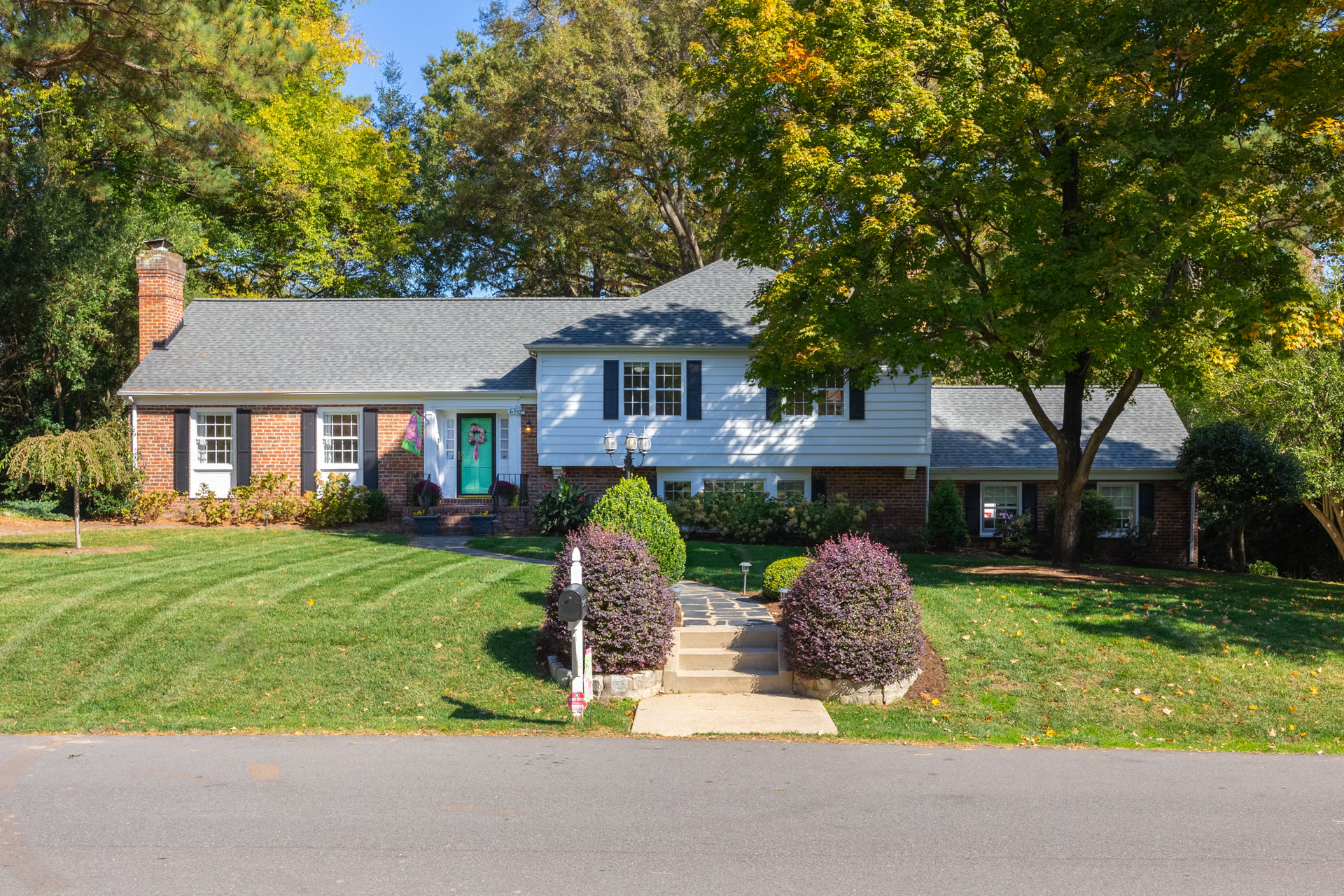
Tuckahoe
Attainable “Lower Westchester” prestige with a 32–39 minute Midtown commute.
Market Metrics
$530K–$650K
Median Condo Price
~50% / ~50%
Ownership Rate
0.10–0.20 acres
Typical Lot Range
Strategic Overview
Executive Summary
Connectivity
Central Access Logic
Airport: 35 min (illustrative)
Downtown: 35 min (Midtown Manhattan rail, peak express midpoint)
Minutes (illustrative)

Two-Station Advantage
Many residents can choose between Tuckahoe and Crestwood stations—reducing commute risk and protecting “walk-to-train” value.

Attainable Exclusivity
Metroplex Strategic Placement
Tuckahoe Strategic Location
How close is Tuckahoe to Midtown Manhattan?
Peak express rail is roughly 32–39 minutes to Grand Central. Local trains can run longer (about 45–50 minutes), but the Harlem Line frequency keeps the commute reliable for daily NYC workers.
Why does the “two-station advantage” matter in real life?
It reduces commute failure risk. If parking is tight or a train is missed at one station, the other is a practical backup—making the neighborhood feel more resilient than single-station commuter towns.
What nearby hubs are easy for a split-commute household?
White Plains is typically about 15–20 minutes away. That access makes Tuckahoe workable for couples where one commutes to NYC and the other works in Westchester.
Market Queries
Tuckahoe Essentials
What’s the true entry point to buy in Tuckahoe?
One-bedroom co-ops can still trade around $160K–$280K. This entry tier is a major reason Tuckahoe functions as a “release valve” for buyers priced out of nearby single-family estate markets.
What does the mid-market look like for condos and smaller homes?
The core mid-market sits around $500K–$850K. That range typically includes larger 2-bedroom condos and smaller or less-updated single-family options, with condo medians often hovering around $530K–$650K depending on amenities.
What’s the “upper tier” price band in Tuckahoe?
Turnkey premium product often starts around $900K and can push past $1.5M. Fully renovated Colonials and larger luxury condos (including loft-style inventory like Rivervue) command the highest pricing.
How big are lots and homes compared to typical Westchester suburbs?
Lots are commonly small—about 0.10–0.20 acres with 1,500–2,500 sq ft homes. That density is part of the trade: smaller private space in exchange for walk-to-train convenience.
What’s the biggest “gotcha” in the cost structure?
Monthly carrying costs can surprise buyers. Co-op maintenance/HOA fees can be substantial, and property taxes in the area can materially affect affordability even when the purchase price looks attractive.
Tuckahoe, New York
Market Monitor & Neighborhood Narrative
Tuckahoe:
Attainable “Lower Westchester” prestige with a 32–39 minute Midtown commute.
A compact, transit-oriented “urban-suburban bridge” with two Metro-North stations, a walkable core, and rare housing diversity (co-ops, condos, missing-middle multi-family, and small-lot single family) that keeps the entry price far below Bronxville/Scarsdale while preserving location advantage.
Strategic Overview
Executive Summary
Tuckahoe is a high-density, transit-oriented village in Westchester County that operates as an “urban-suburban” bridge between NYC intensity and Northern Westchester estate suburbs.
Its “two-station advantage” places much of the housing within a 10–15 minute walk to Metro-North, delivering roughly a 30–40 minute ride to Grand Central while offering a broader, more attainable housing mix than adjacent prestige markets.
Market Metrics
$530K–$650K
Median Condo Price
Mid-market anchor range for “walk-to-train” ownership.
~50% / ~50%
Ownership Rate
Balanced owner/renter mix driven by co-ops, condos, and multi-family.
0.10–0.20 acres
Typical Lot Size
Small-lot density that supports true village walkability.
Connectivity
Central Access Logic
Tuckahoe’s value is built on commuter reliability: two Metro-North stations create a “redundant” transit shed, and peak express rail reaches Grand Central in the mid-30-minute range while nearby Westchester hubs remain a short drive.
Airport: 35 min (illustrative)
Downtown: 35 min (Midtown Manhattan rail, peak express midpoint)
Minutes (illustrative)

Two-Station Advantage
Many residents can choose between Tuckahoe and Crestwood stations—reducing commute risk and protecting “walk-to-train” value.

Attainable Exclusivity
Similar geography to Bronxville with a major price discount, supported by diverse housing types and strong commuter demand.
Metroplex Strategic Placement
Tuckahoe Strategic Location
How close is Tuckahoe to Midtown Manhattan?
Peak express rail is roughly 32–39 minutes to Grand Central. Local trains can run longer (about 45–50 minutes), but the Harlem Line frequency keeps the commute reliable for daily NYC workers.
Why does the “two-station advantage” matter in real life?
It reduces commute failure risk. If parking is tight or a train is missed at one station, the other is a practical backup—making the neighborhood feel more resilient than single-station commuter towns.
What nearby hubs are easy for a split-commute household?
White Plains is typically about 15–20 minutes away. That access makes Tuckahoe workable for couples where one commutes to NYC and the other works in Westchester.
Market Queries
Tuckahoe Essentials
What’s the true entry point to buy in Tuckahoe?
One-bedroom co-ops can still trade around $160K–$280K. This entry tier is a major reason Tuckahoe functions as a “release valve” for buyers priced out of nearby single-family estate markets.
What does the mid-market look like for condos and smaller homes?
The core mid-market sits around $500K–$850K. That range typically includes larger 2-bedroom condos and smaller or less-updated single-family options, with condo medians often hovering around $530K–$650K depending on amenities.
What’s the “upper tier” price band in Tuckahoe?
Turnkey premium product often starts around $900K and can push past $1.5M. Fully renovated Colonials and larger luxury condos (including loft-style inventory like Rivervue) command the highest pricing.
How big are lots and homes compared to typical Westchester suburbs?
Lots are commonly small—about 0.10–0.20 acres with 1,500–2,500 sq ft homes. That density is part of the trade: smaller private space in exchange for walk-to-train convenience.
What’s the biggest “gotcha” in the cost structure?
Monthly carrying costs can surprise buyers. Co-op maintenance/HOA fees can be substantial, and property taxes in the area can materially affect affordability even when the purchase price looks attractive.